Home›How the Global Trade War Is Hitting Your Wallet Ri…
How the Global Trade War Is Hitting Your Wallet Right Now
EEditorial Team2026-08-28👁 469 views
Share:✅ Copied!
Most people experience the global economy through the price of things. The coffee they buy every morning. The phone charger they ordered online. The school shoes they picked up last weekend. None of those products arrive from just one country anymore — they travel through a complex chain of factories, ports, trucks, and warehouses that spans the entire planet. And right now that chain is under more stress than it has been since the Second World War.
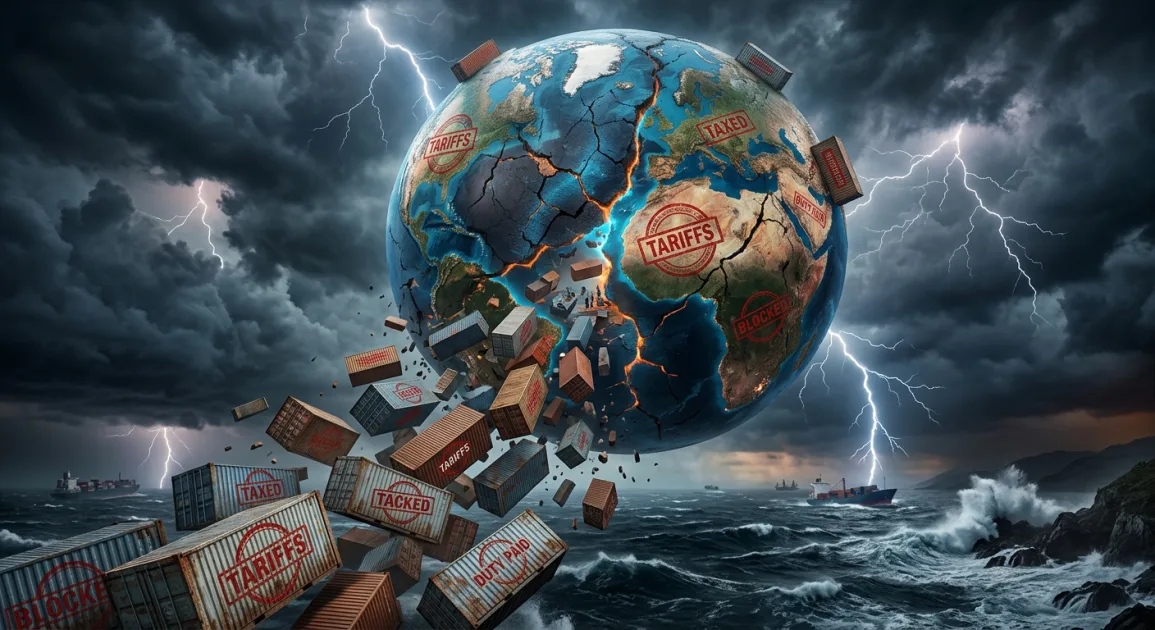
The trade war between the United States and the rest of the world — driven by sweeping tariffs introduced under President Trump — has reshaped global economics in ways that are still unfolding in 2026. The IMF now expects global economic growth to slow to just 2.7 percent this year. Bloomberg Intelligence estimates the cumulative hit to global GDP could reach two trillion dollars by the end of 2027. These are not abstract numbers. They are the reason prices are higher, jobs are shifting, and the economic assumptions millions of families built their lives around are no longer reliable.
What Tariffs Actually Are and Why They Hit You Not China
There is a widespread misunderstanding about how tariffs work that has allowed politicians to present them as painless weapons against foreign countries. A tariff is a tax. It is paid by the company importing the goods — not by the country that made them. That cost gets passed down the supply chain until it reaches the last person in the chain. That person is you.
When the United States placed tariffs on Chinese goods, American retailers, manufacturers, and distributors paid more to bring those products into the country. Some absorbed part of the cost. Most passed the majority of it to consumers through higher prices. Walmart warned publicly that tariffs would force price increases on everyday products ranging from food to electronics to household goods.
The average US tariff rate rose from 2.3 percent in January 2025 to 13.3 percent by mid-year — the highest level since 1939. Every percentage point of that increase represents a cost that flows through the economy and lands in the shopping basket of ordinary families. The people who feel it most are the people who spend the highest proportion of their income on goods rather than services — which means lower and middle income households bear the heaviest burden.
The $2 Trillion Hit Nobody Voted For
Bloomberg Intelligence's projection of a two trillion dollar hit to global GDP by 2027 is built on a relatively conservative assumption — that US tariffs settle at around fifteen percent. If trade tensions escalate further, that number grows. If major economies retaliate more aggressively than they have so far, the damage accelerates.
China was the one country that hit back forcefully in the early stages of the trade war. The US responded by backing down more quickly than it had signaled it would. That dynamic — China retaliating, the US moderating — played out across multiple rounds of trade talks that have produced five negotiating sessions without resolving the fundamental tensions between the world's two largest economies.
The result is a global economy operating under significant uncertainty. Companies cannot plan supply chains with confidence. Investors cannot price risk accurately. Consumers face prices that shift based on diplomatic developments they cannot track or predict. The IMF head Kristalina Georgieva described the situation as better than feared but worse than it needs to be — a summary that captures both the resilience of the global economy and the genuine damage being done to it.
How China Is Being Quietly Squeezed
While American consumers feel tariffs through higher prices, China feels them through slower growth. Bloomberg Intelligence lowered its 2026 China growth forecast from 5.6 percent to 4.4 percent — a significant downgrade for an economy that has relied on export-driven growth for decades. That missing 1.2 percent of GDP represents millions of jobs, billions in lost factory output, and pressure on Chinese companies that built their entire business model around selling to American consumers.
China's response has been to accelerate its push into other markets. Chinese manufacturers have deepened trade relationships with Southeast Asia, Africa, the Middle East, and Latin America — regions where US tariffs do not apply and where growing middle classes represent genuine demand for affordable manufactured goods. The trade war intended to weaken China's economic position has instead accelerated the diversification of its export markets in ways that may prove strategically significant for decades.
Inside China, the government has responded with stimulus measures designed to shift the economy toward domestic consumption. The long-term goal of making Chinese growth less dependent on exports to Western markets was already a strategic priority. The trade war has given it new urgency and political cover to move faster than would otherwise have been politically comfortable.
The Countries Nobody Is Talking About That Are Winning Right Now
Every trade war creates winners alongside the losers, and the winners in the current conflict are countries that sit outside the main battle lines. Vietnam, India, Mexico, and several other emerging economies have seen significant increases in manufacturing investment as companies relocate supply chains away from China to avoid US tariffs.
This supply chain reshuffling — called nearshoring when it moves production closer to the US and friendshoring when it moves to politically aligned countries — represents one of the largest reconfigurations of global manufacturing geography in modern history. Factories that took decades to build in China are being replicated in countries that had minimal manufacturing bases five years ago.
For the workers in those countries this is genuinely positive — new jobs, rising wages, and the beginning of an industrial base that creates long-term economic development. For global consumers, it means supply chains that are shorter and less concentrated, which reduces the vulnerability exposed so dramatically during the COVID disruptions of the early 2020s.
What This Means for Your Money in the Next Twelve Months
The honest answer is that prices for manufactured goods are unlikely to fall significantly in the near term regardless of how trade negotiations develop. Supply chains that have been restructured do not snap back quickly. Companies that have invested in new manufacturing locations do not abandon them when diplomatic signals shift. The inflationary pressure from the trade war has been partially absorbed but not eliminated.
What you can do practically is understand which categories of goods are most affected by current tariffs and adjust your purchasing timing and strategy accordingly. Electronics, clothing, household appliances, and tools have all seen tariff-driven price increases. Buying ahead of announced tariff increases — when that information is publicly available — is a legitimate consumer strategy that sophisticated buyers are already using.
The deeper lesson of the 2025 and 2026 trade war period is that the global economy is more interconnected and more fragile than most people understood before prices started rising. The factory in Guangzhou, the container ship in the Pacific, and the shelf in your local supermarket are all part of a single system. When that system is disrupted at one end, every person at the other end eventually feels it — whether they follow global trade news or not.